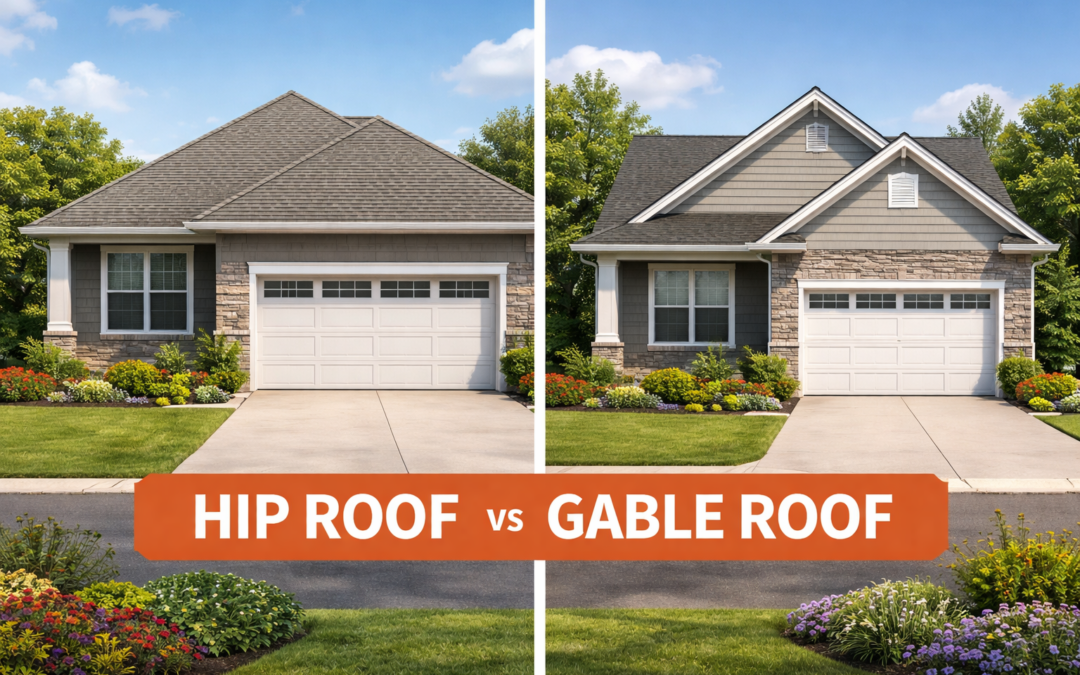
When planning a new roof or deciding on a replacement, understanding the difference between a hip and gable roof is essential. These two popular roof types shape the look of a home, impact building costs, influence durability, and determine performance in different weather conditions. In this guide, we cover everything you need to know about hip roof vs gable roof from definitions and structural differences to pros and cons, real‑world use cases, and how to choose the right option for your home.
What Is a Gable Roof? Gable Roof Basics
A gable roof is a classic roof shape that consists of two sloping sides that meet at a central ridge, forming a triangular end on each side of the house. This triangular section is called the gable end, and it creates the traditional “A‑shaped” roof appearance that many homeowners recognize. Gable roofs can vary in pitch and size, but their defining feature is the two‑plane design that forms a peak at the top.
Key Characteristics of Gable Roofs
Two main slopes forming a simple, efficient roof shape
Triangular gable ends visible on exterior walls
Excellent for shedding water, snow, and debris
Can easily accommodate attic space or vaulted ceilings
Gable roofs are widely chosen for their simplicity, cost‑effectiveness, and classic architectural appeal, especially in regions with cold or snowy climates.
What Is a Hip Roof? Hip Roof Basics
A hip roof has a different layout: all four sides of the roof slope down toward the walls. Unlike a gable roof, a hip roof has no vertical ends and is characterized by its inward‑sloping planes on every side. The intersection lines of these slopes are called hips, giving the roof its name.
Key Characteristics of Hip Roofs
Four sloping sides that meet at the roof’s peak or ridge
No gable ends or vertical walls at the edges
Even eave height all around the house
Typically more complex and material‑intensive to build
Hip roofs have a more aerodynamic shape, which can make them more stable and visually balanced compared to simpler roof styles.
Hip Roof vs Gable Roof Structural & Design Differences
Understanding the architectural differences between these two roof types helps homeowners make better decisions based on needs and budget:
Roof Shape and Geometry
Gable Roof Shape: Two main planes with a central ridge and vertical gable ends.
Hip Roof Shape: Four slopes with no vertical faces, creating a consistent, all‑around roof line.
Because a gable roof has vertical gable walls, it offers more internal attic space. A hip roof’s inward slopes reduce attic volume but provide a continuous edge around the home.
Roof Framing & Construction
Hip roofs require more complex framing than gable roofs due to the additional slopes and hips, which increases labour and material needs. Gable roofs are simpler to frame, making them quicker and often more affordable to construct.
Pros & Cons: Gable Roof vs Hip Roof
Here’s a homeowner‑friendly breakdown of advantages and disadvantages when comparing the two roof types:
Advantages of Gable Roofs
Cost‑Effective: Gable roofs are generally less expensive due to simple design and fewer materials.
Attic Space: The peaked shape allows more attic room that can be used for storage or finished space.
Ventilation: Gable roofs can facilitate excellent airflow with gable vents or ridge vents.
Ease of Construction: Fewer roof planes mean quicker builds and less labour cost.
Disadvantages of Gable Roofs
Wind Vulnerability: The vertical gable ends can catch wind, making them more prone to uplift in high‑wind areas.
Less Stable in Certain Conditions: Additional bracing may be needed in hurricane‑prone regions.
Advantages of Hip Roofs
Superior Stability: With slopes on all sides, hip roofs are more resistant to high winds and extreme weather.
Balanced Design: A continuous eave line around the home enhances aesthetics and curb appeal.
Even Water & Snow Drainage: Four‑way slopes distribute water runoff efficiently.
Disadvantages of Hip Roofs
Higher Cost: More materials and labour make hip roofs costlier to build and replace.
Reduced Attic Space: The inward slope reduces usable attic volume compared to gable roofs.
Hybrid & Advanced Roof Designs
Some homes blend the benefits of both roof styles with hybrid designs:
Hip and Gable Roof (Dutch Gable)
A Dutch gable roof combines the four‑sided hip roof base with a small gable at the top, adding visual interest and extra attic space.
Half Hip Roof
Also known as a clipped gable, this design features a small hip section at the peak of a gable roof for improved wind performance without sacrificing too much attic space.
These hybrid options offer architectural variety and functional benefits depending on homeowner preferences.
Residential Use Cases How They Look On Homes
Both hip and gable roofs are widely used in residential designs:
Homes With Gable Roofs
Common in many classic home styles, gable roofs work well with colonial, farmhouse, and cottage designs. They add height and character to homes while maximizing attic or loft space.
Homes With Hip Roofs
Hip roof houses are popular in modern, ranch, and suburban architectural styles where a smooth, consistent roofline enhances aesthetics and performance in windy climates.
Which Is Better Hip Roof or Gable Roof?
There’s no single “best” roof the right choice depends on your climate, budget, aesthetic preference, and structural priorities:
Budget‑Friendly & Accessible: Gable roofs often win for affordability and attic space.
Wind‑Resistant & Durable: Hip roofs perform better in storm‑prone areas.
Mixed Styles: Hybrid designs like Dutch gable roofs give a middle ground.
For homeowners deciding between gable vs hip roof, consider your local weather conditions, desired attic use, and architectural goals before selecting a roof style.
If you’re still unsure whether a hip roof or gable roof is best for your home, the expert team at GVRD Roofing can help you evaluate your options, match your roof to your climate, and plan your project with confidence. Contact us today for personalized guidance and a free estimate:
GVRD Roofing Inc.