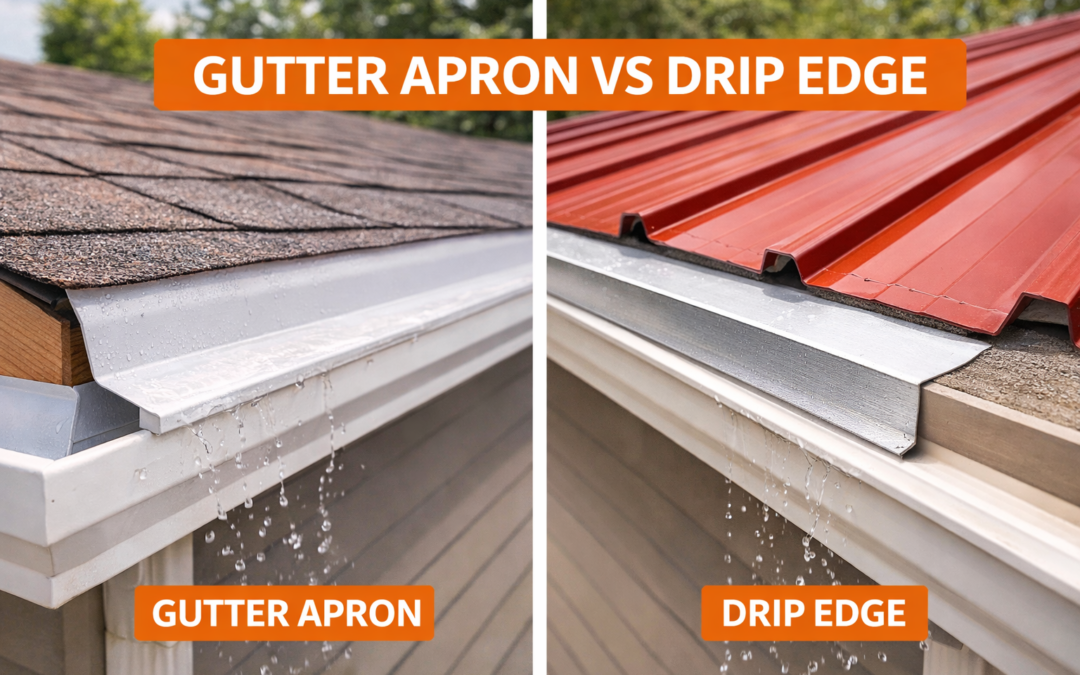
Every roof has edges, and those edges play an important role in protecting your home from water damage. Two critical components used around roof edges and gutters are the drip edge and the gutter apron.
Many homeowners ask:
• What is a drip edge and what is a gutter apron?
• Is a gutter apron better than a drip edge?
• Do you need both drip edge and gutter apron?
• Does drip edge go under gutters or over them?
• Are gutter aprons neces sary?
In this comprehensive guide, we’ll explain in detail:
What a drip edge is
What a gutter apron is
How they differ in form and function
When to use one, the other, or both
How they install and common mistakes
Materials, styles, and product options
Repair problems and typical costs
By the end, you’ll clearly understand gutter apron vs drip edge, how they work together, and which solution is best for your roof.
What Is a Drip Edge?
A drip edge is a metal flashing installed along the edges of a roof, typically at the eave and rake. Its primary purpose is to guide water away from the fascia, roof deck, and siding so that rainwater doesn’t run back underneath the roofing materials.
What does drip edge do?
• Redirects water away from vulnerable roof edges
• Prevents water from running behind gutters
• Protects fascia and wood trim from rot
• Helps prevent attic leaks and moisture damage
• Completes the roof edge system for waterproofing
Is drip edge necessary?
Yes. Modern building codes generally require drip edge because it significantly reduces the risk of water damage. Without drip edge, water can seep under shingles or roofing panels and compromise the roof structure.
What Is a Gutter Apron?
A gutter apron is a type of flashing that works where the roof meets the gutter. It extends from the roof deck into the front edge of the gutter, creating a continuous surface to shed water directly into the gutter without getting behind it.
What is apron flashing?
The gutter apron is a specialized type of flashing placed under the roofing material on top and over the gutter edge on the bottom. It ensures water flows directly into the gutter rather than behind it, preventing water from damaging fascia and soffits.
In many roof systems, gutter apron and drip edge work together at the roof perimeter.
Gutter Apron vs Drip Edge: What’s the Difference?
Both drip edge and gutter apron help manage water at the edge of your roof, but they serve slightly different functions and install in different locations.
Side‑by‑Side Comparison Table
| Feature | Drip Edge | Gutter Apron |
|---|---|---|
| Location | Under shingles over roof edge | Under shingles into gutter edge |
| Purpose | Direct water away off roof edge | Channel water into the gutter |
| Visible After Installation | Yes | Yes |
| Protects fascia | Yes | Yes |
| Works with gutters | Yes | Yes |
| Code required | Usually | Varies |
Quick Summary: Drip edge protects the edge of your roof; gutter apron ensures water flows directly into the gutter system.
When to Use a Drip Edge Only
You might only need drip edge when:
• Your roof does not currently have gutters
• You are installing a standalone roof edge system
• You want basic drip protection at eaves and rakes without gutters yet
In those cases, the drip edge ensures water sheds beyond the roof without getting behind fascia boards.
When to Use a Gutter Apron Only
A gutter apron alone may be used if:
• You are retrofitting gutters to an existing roof with no edge detail
• Your roof has a generous overhang already protected by drip edge or fascia
• You need to funnel water into the gutter without installing a full edge system
However, using both provides the best waterproofing integrity.
When You Should Use Both Together
In most roofing systems especially with gutters installing both drip edge and gutter apron provides the most effective water management.
Why? Because:
• A drip edge protects the roof edge and fascia
• A gutter apron directs water into the gutter system
• Together, they prevent leaks, rot, and foundation splash back
Most roofing professionals recommend using both in any roof with gutters.
Where Each One Goes on the Roof
Where does drip edge go on a roof?
Drip edge is installed at:
• The eave (horizontal roof edge)
• The rake (sloping roof edges)
• Under roofing shingles or panels according to code
Where does gutter apron go?
Gutter apron is installed:
• Where the roof meets the gutter front edge
• Usually tucked under shingles and bent into the gutter
The order of installation matters: most roofer follow manufacturer and code guidelines to ensure water sheds correctly without building leaks.
Installation Basics and Mistakes to Avoid
Proper installation of drip edge and gutter apron is critical. Here’s what pros look for:
• Install drip edge under underlayment at the eave to stop water from rising under the roof deck
• Install drip edge over underlayment at the rake for clean finish and water flow
• Install gutter apron into the gutter front edge and under the roofing material
• Overlap drip edge pieces properly, preventing water intrusion at seams
• Avoid gaps between trim and gutters which can cause water to get behind the system
Common Installation Mistakes
• Installing drip edge only at rakes and not eaves
• Installing drip edge over gutters incorrectly
• Not overlapping pieces properly
• Not integrating gutter apron with roofing underlayment
• Skipping sealant at penetrations
If installed incorrectly, both drip edge and gutter apron can fail to protect the roof leading to water leaks and wood rot over time.
Materials and Styles of Drip Edge or Gutter Apron
Different materials offer different benefits in terms of durability and appearance.
Common Materials
• Aluminum drip edge or gutter apron Lightweight and corrosion resistant
• Galvanized steel Strong and cost‑effective
• Copper drip edge or gutter trim Premium and long‑lasting
• Black or colored coatings For aesthetic match with roofing or trim
Styles of Drip Edge
• L shaped drip edge Simple profile for standard edge protection
• Type F and F8 drip edge Enhanced front drip for upgraded performance
• T style drip edge Dewater edge protection with stronger drip point
Each material and style is selected based on budget, roof type (shingle, metal, tile), and local weather conditions.
Do Gutters Go Under Drip Edge?
One of the most asked questions is: Do gutters go behind drip edge?
The short answer is:
Gutters are typically installed under the drip edge at the eaves.
This ensures water that flows off the drip edge enters the gutter directly and does not get behind it.
If gutters are installed before drip edge, the roofing system must be modified so water is still directed into the gutter without allowing water to flow behind the gutter or fascia.
Gutter Flashing vs Drip Edge vs Apron Flashing
Some people use the terms interchangeably, but they are not the same:
• Gutter flashing typically refers to any flashing used around gutters to prevent leaks
• Drip edge protects roofing edges and redirects water
• Gutter apron specifically feeds water into the gutter edge
Understanding these terms helps you communicate with your roofing contractor and ensures you get the best system installed.
Common Problems and How to Fix Them
Some issues homeowners see with drip edge or gutter aprons include:
Gap Between Drip Edge and Gutter
This leads to water slinging back under the fascia. Fix by bending the drip edge slightly or installing a gutter apron.
Rusting Metal Edge
Replace with corrosion‑resistant materials such as aluminum or copper.
Water Getting Behind Gutters
Often a result of incorrect installation order. The solution is to reinstall drip edge and gutter apron correctly.
Leaking at Flashing Transitions
Caused by gaps in overlap or missing sealant. Properly overlap pieces and seal with roofing approved sealants.
Frequently Asked Questions
1.Is gutter apron better than drip edge?
Not really they serve different roles. One is not inherently better. Together they protect the roof edge and gutters.
2.Do you need both drip edge and gutter apron?
In most cases yes especially if you have gutters.
3.What is the alternative to drip edge?
There is no complete alternative. Drip edge is designed to manage water at the roof edge. Other flashings may help, but they won’t replace the function of a drip edge.
4.Is a gutter apron required?
Gutter apron isn’t always code required the way drip edge often is, but it is highly recommended with gutter systems.
5.What goes on first drip edge or gutter?
Typically drip edge is installed first, and then the gutter apron or gutter system is integrated so water flows into gutters without being trapped behind them.
6.Can you install drip edge without removing gutters?
Yes, but it requires careful work to slip it between components without damaging roof materials.
7.What is the correct way to install drip edge?
Under at the eaves and over at the rakes with proper overlaps and integration with underlayment and gutters.
Conclusion Which Do You Need: Gutter Apron or Drip Edge?
Both components are important for a water‑tight roof edge system. Drip edge manages roof edge water flow and protects and completes the roofing waterproofing system. Gutter apron maximizes gutter performance by directing water into the system and preventing water from getting behind gutters.
For most homes with gutters, the best solution is both drip edge and gutter apron installed properly. This maximizes protection and reduces future repair needs.
If you have questions about your roof’s edge protection or need professional installation, reach out to GVRD Roofing. Our team assesses your roof edge needs, recommends the best solution, and ensures your roof system is installed for long‑lasting performance.
Get expert roof edge inspection or gutter apron and drip edge installation here GVRD Roofing Inc.