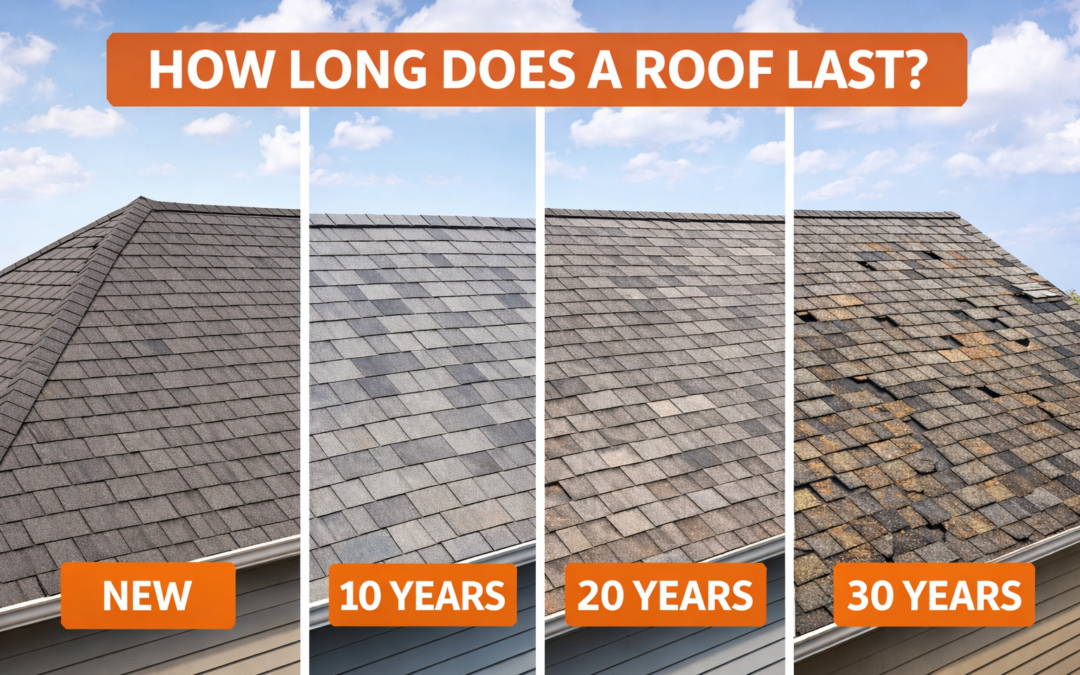
Every homeowner eventually asks: how long does a roof last? Whether you’re building a new home, planning a roof replacement, budgeting for future repairs, or simply curious about roof lifespan, this complete guide explains roof life expectancy, average roof lifespans by material, when to replace your roof, and how maintenance can extend how long your roof lasts.
We’ve also included clear answers to common questions like:
How often should you replace a roof?
What is the average life of a roof?
What roof lasts 100 years?
How often do you have to replace a roof on your house?
Let’s get started.
How Long Does a Roof Last? Understanding Roof Lifespan
When we ask “how long does a roof last?”, the answer isn’t one single number it depends on multiple factors including roofing material, climate, installation quality, ongoing maintenance, and roof slope. Some roofs are expected to last only 15 years, while others can endure more than a century.
Roof Life Expectancy What it Means
Roof life expectancy or roof life span is the period a roof material can reliably protect your home before showing signs that a replacement is needed. This is influenced by:
Roofing material quality
Weather and climate conditions
Proper installation
Routine inspections and maintenance
Average Lifespan of a Roof Overview
The average roof lifespan varies widely:
| Roof Type / Material | Typical Lifespan |
|---|---|
| Asphalt shingles (standard) | ~15–25 years |
| Architectural / dimensional shingles | ~25–40 years |
| Metal roofing (steel, aluminum) | ~40–70 years |
| TPO / rubber / flat membranes | ~20–30 years |
| Slate | ~75–200+ years |
| Tile (clay / concrete) | ~50–100+ years |
| Cedar shake / wood | ~20–40 years |
This table gives a benchmark, but your roof’s actual lifespan could be longer or shorter based on the factors we’ll explore.
Material‑Specific Roof Lifespans
Let’s break down how long each roof material typically lasts this is crucial when deciding which roof is right for your home or replacement project.
Asphalt Shingle Roofs
One of the most common residential roofing materials:
Standard asphalt shingles: ~15–25 years
How long does a 30‑year roof really last: Real‑world experience shows 30‑year shingles often last 20–25 years depending on exposure to sun, wind, and storm conditions.
Architectural / Dimensional Shingles
Upgraded asphalt shingles designed to resist wind and aging:
Lifespan: ~25–40 years
Better than basic shingles due to thicker design and enhanced weather resistance.
Metal Roofs
Metal roofing including standing seam and metal panels offers a long lifespan:
Metal roof life expectancy: ~40–70 years or more
High‑quality metal roofs can outlast traditional shingles when properly maintained.
Flat Roof Materials (TPO / Rubber / Membranes)
Flat roofs are common on commercial buildings and some modern homes:
TPO roofing: ~20–30 years
EPDM rubber roofs: ~20–30 years
PVC membranes: ~25–35 years
Flat roofs may require more frequent inspection due to water pooling risk.
Slate and Tile Roofs
These are among the most durable roofing materials:
Slate roofs: ~75–200+ years
Clay tile roofs: ~50–100+ years
These materials often last multiple lifetimes and are prized for longevity and architectural beauty.
Wood Shake Cedar Roofing
Traditional and rustic in look:
Cedar shake lifespan: ~20–40 years
Can vary significantly based on humidity, dryness, and maintenance.
How Climate & Weather Affect Roof Lifespan
Climate plays a major role in roof longevity. Extreme temperatures, humidity, hail, and heavy storms can shorten a roof’s life.
Hot, Sunny Climates
Roofs in desert or southern regions may age faster due to UV rays degrading materials. Asphalt shingles can crack and curl sooner.
Cold, Snowy Climates
Heavy snow and ice can stress roof materials and promote ice dams. Flat roofs may face more wear due to moisture and freeze‑thaw cycles.
Windy, Storm‑Prone Regions
High winds can lift shingles, impact metal roofing, and shorten the lifespan of lightweight materials.
While specific city predictions vary (e.g., how long does a roof last in Arizona vs Ohio), the general rule is more severe weather = more frequent inspections and earlier replacements.
Residential vs Commercial Roof Lifespan
Roof lifespan also differs between residential and commercial structures:
Residential roof lifespan: Typically determined by materials like shingles, metal, or tile. Home roofs often see 15–50+ year lifespans.
Commercial roof lifespan: Depends on system type (TPO, EPDM, modified bitumen) and building usage. Some commercial roofs may need replacement every 15–25 years.
Industrial roofing often includes protective coatings and specialized membranes that change expected longevity.
How Often Should You Replace a Roof?
This directly relates to how long a roof is supposed to last:
Asphalt shingles: Typically replaced around year 20–25
Architectural shingles: Often replaced closer to year 30–40
Metal roofs: May not need replacement until year 50 or beyond
Slate/tile roofs: Can go 75–100+ years
Flat roofs: Commonly replaced every 20–30 years
So, how often do you have to replace a roof on your house? Rarely more than once in a home’s lifetime if quality materials and installation are used — except in extreme climates or without proper maintenance.
When to Replace Your Roof Signs and Timing
Knowing when to replace a roof can save you money and prevent interior damage.
Signs You Need a New Roof
Missing, cracked, or curling shingles
Soft spots on roof deck
Daylight seen through attic boards
Water stains on ceilings
Repeated leaks after storms
Granules in gutters (from shingle wear)
Age Is Key
If your roof is approaching the upper range of its expected lifespan, it’s time to plan for replacement — even without visible damage.
Roof Maintenance & Longevity Tips
Routine roof maintenance helps your roof achieve or exceed its expected life.
Routine Inspections
Twice a year spring and fall
After major storms
Gutter Cleaning
Clogged gutters can cause water backup and roof edge damage.
Flashings & Seals
Ensure chimney, vent, and skylight flashing remains sealed.
Trim Nearby Trees
Overhanging branches can scrape roofing and drop debris that traps moisture.
Regular attention can extend how long your roof lasts even adding years to your investment.
Roof Shingle Life Expectancy What to Expect
Shingle roofs, especially architectural shingles, are the most common in residential neighborhoods:
Roof shingle life expectancy: ~15–40 years depending on type
Shingles lifespan is affected strongly by installation quality and climate.
Choosing higher‑quality shingles with better warranties often pays off in longer service life.
Warranties vs Real Roof Lifespan
It’s important to understand the difference between roof warranty and roof lifespan:
A 25‑year shingle warranty doesn’t guarantee you’ll get 25 years it’s a manufacturer’s guarantee against certain defects.
Real world scenarios often see 25‑year shingles last 15–25 years depending on conditions.
Always check warranty terms and speak with professionals to understand what’s covered.
What Roof Lasts 100 Years?
Materials like slate and tile roofing have the potential to last more than a century some historic roofs still function after 100+ years of service. These are premium materials that require skilled installation but deliver unmatched longevity.
How Long Is a Roof Good For Quick Recap
| Material | Good For |
|---|---|
| Standard Asphalt Shingles | ~15–25 years |
| Architectural Shingles | ~25–40 years |
| Metal Roof | ~40–70+ years |
| Flat Membranes (TPO/EPDM) | ~20–30 years |
| Slate / Tile | ~50–200+ years |
| Cedar Shake | ~20–40 years |
This helps answer how long is a roof good for in practical terms.
FAQ — Roof Lifespan Questions
How long does a roof normally last?
Most roofs last 15–50+ years; the exact number depends on material and care.
How long do roofs last?
Ranges from ~15 years (basic shingles) to >100 years (tile/slate).
How long should a roof last?
A properly installed roof with maintenance should reach the upper end of its expected lifespan.
At what age should a roof be replaced?
Typically when it reaches its life expectancy range or shows signs of failure.
Planning Ahead Roof Replacement and Costs
When budgeting for a new roof, consider:
Material choice
Labor costs
Roof size & slope
Local climate conditions
Planning replacement before major failure can reduce emergency repair costs.
Summary Roof Lifespan & What It Means for You
Understanding how long does a roof last helps you prepare financially, protect your home, and choose the right roofing system. From average roof lifespan tables to material‑specific expectations, routine maintenance, and signs it’s time to replace, this guide covers everything homeowners need to know to make informed roofing decisions.
If your roof is nearing the end of its expected life or you’re unsure when to get a new roof, the experienced professionals at GVRD Roofing can help with a full inspection, honest advice, and quality roof replacement services. Contact us today GVRD Roofing Inc for a free estimate: