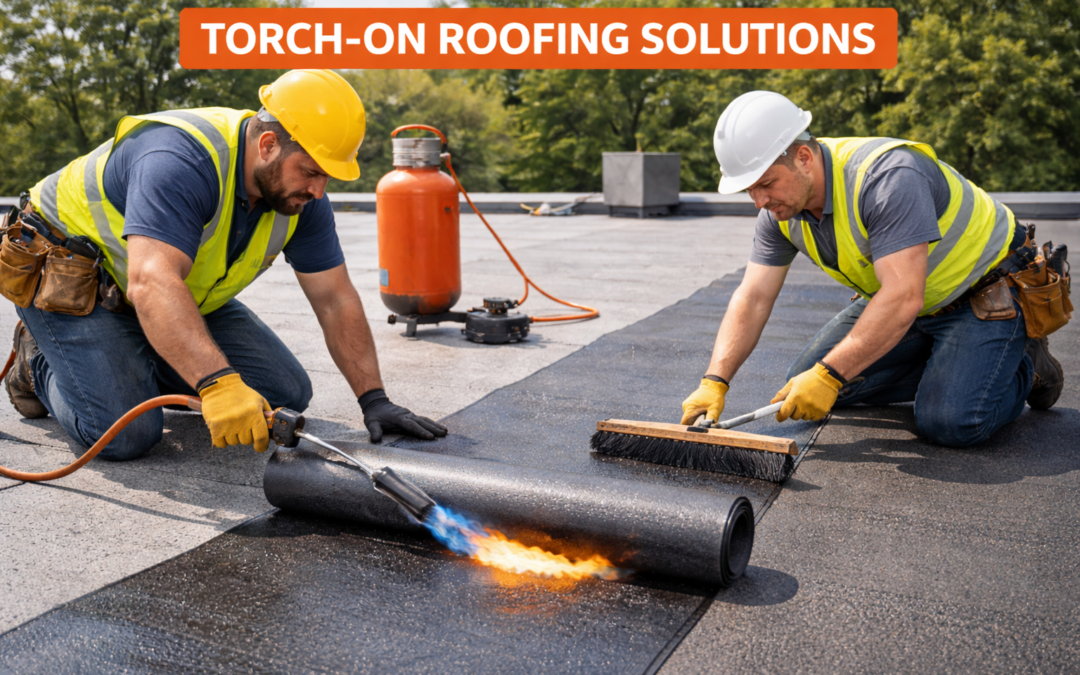
Torch-on roofing is one of the most trusted and widely used solutions for flat and low-slope roofs in both residential and commercial construction. Known for its durability, waterproofing strength, and long-term performance, torch-on roofing has become a preferred choice in regions that experience heavy rainfall, fluctuating temperatures, and demanding weather conditions.
This in-depth guide explores torch-on roofing solutions from every angle. You will learn what torch-on roofing is, how it works, the types of torch-on systems available, installation processes, performance benefits, maintenance requirements, and why professional installation is essential for achieving long-lasting results.
What Is Torch-On Roofing
Torch-on roofing is a modified bitumen roofing system designed primarily for flat or low-slope roofs. It consists of asphalt-based membranes that are heat-welded to the roof surface using an open-flame torch during installation. The heat melts the underside of the membrane, allowing it to bond directly and securely to the substrate.
The result is a seamless, watertight roofing layer that offers exceptional resistance to moisture infiltration, weather exposure, and wear over time.
Torch-on roofing is commonly used on:
Flat residential roofs
Commercial buildings
Apartment complexes
Industrial facilities
Garages and extensions
Why Torch-On Roofing Solutions Are So Popular
Torch-on roofing has earned its reputation due to a combination of strength, reliability, and adaptability.
Superior Waterproofing
The heat-welded seams create a continuous membrane that minimizes the risk of leaks, making torch-on roofing one of the most waterproof flat roofing options available.
Durability and Longevity
When installed correctly, torch-on roofing systems can last 20 to 30 years or more with proper maintenance.
Weather Resistance
Torch-on membranes perform exceptionally well against rain, snow, and temperature changes, making them suitable for challenging climates.
Cost Effectiveness
Compared to some modern flat roofing systems, torch-on roofing offers excellent value for its lifespan and performance level.
Types of Torch-On Roofing Systems
Not all torch-on roofing systems are the same. Understanding the available options helps property owners select the right solution for their building.
Two-Ply Torch-On Roofing System
The two-ply system is the most common torch-on roofing configuration.
System Components
Base sheet applied to the roof deck
Cap sheet torched onto the base layer
Advantages
Enhanced waterproofing
Improved durability
Better resistance to punctures
This system is widely used for both residential and commercial flat roofs.
Three-Ply Torch-On Roofing System
A three-ply system adds an extra reinforcement layer for higher performance needs.
System Components
Base sheet
Intermediate reinforcement layer
Cap sheet
Advantages
Maximum protection
Increased lifespan
Superior performance in high-traffic or extreme environments
Three-ply systems are often used on commercial or industrial buildings where roof access is frequent.
Granulated Torch-On Cap Sheets
Granulated cap sheets feature mineral granules embedded on the surface.
Benefits
UV protection
Improved durability
Enhanced slip resistance
More finished appearance
Granulated finishes also help regulate surface temperature and extend roof life.
Smooth Torch-On Cap Sheets
Smooth cap sheets lack granules and are often coated or protected with additional layers.
Benefits
Easier detailing around penetrations
Often used in multi-layer systems
Suitable for specific design requirements
Materials Used in Torch-On Roofing
Torch-on roofing membranes are typically made from modified bitumen, enhanced with polymers to improve performance.
APP Modified Bitumen
APP (Atactic Polypropylene) modified bitumen is the most commonly used material in torch-on roofing.
Key Properties
Excellent UV resistance
Strong flexibility
Long-lasting waterproofing
APP membranes are ideal for roofs exposed to sunlight and varying temperatures.
SBS Modified Bitumen
SBS (Styrene-Butadiene-Styrene) modified bitumen offers enhanced elasticity.
Key Properties
Superior flexibility
Better performance in colder temperatures
Strong resistance to cracking
While SBS membranes are often installed using cold adhesives, they can also be part of torch-applied systems.
The Torch-On Roofing Installation Process
Professional installation is critical for torch-on roofing performance and safety. The process follows strict standards to ensure proper adhesion and waterproofing.
Initial Roof Inspection and Assessment
Installation begins with a comprehensive evaluation of the roof, including:
Roof slope and drainage
Deck condition
Structural integrity
Existing roofing materials
This step ensures the roof is suitable for a torch-on system.
Roof Preparation
Proper preparation is essential for successful installation.
Preparation may include:
Removing old roofing materials if necessary
Repairing or replacing damaged decking
Installing insulation or vapor barriers
Cleaning and priming the surface
A clean, dry, and stable substrate is required for proper membrane adhesion.
Base Sheet Installation
The base sheet is applied first, either mechanically fastened or heat-bonded, depending on system requirements. This layer provides the foundation for the roofing system.
Torch Application of Cap Sheet
Using specialized torches, installers carefully heat the underside of the cap sheet while rolling it onto the roof surface. This process:
Creates a strong bond
Seals seams completely
Ensures a continuous waterproof layer
Precision and experience are essential during this phase to avoid overheating or weak adhesion.
Detailing and Flashing Installation
Flashing is installed around:
Roof edges
Drains and scuppers
Skylights and vents
Walls and parapets
Proper detailing prevents leaks at vulnerable transition points.
Final Inspection and Quality Control
After installation, a final inspection verifies:
Seam integrity
Proper adhesion
Drainage performance
Compliance with safety and building codes
Why Professional Torch-On Roofing Installation Matters
Torch-on roofing requires specialized training and strict safety protocols. Improper installation can result in:
Fire hazards
Poor adhesion
Premature failure
Voided warranties
Professional contractors have the expertise, tools, and safety procedures required for torch-on systems.
For property owners seeking reliable workmanship and long-term performance, working with experienced professionals in roofing vancouver ensures torch-on roofing solutions are installed safely, correctly, and to industry standards.
Performance Benefits of Torch-On Roofing Solutions
Torch-on roofing systems deliver multiple performance advantages.
Excellent Waterproofing
Heat-sealed seams provide superior protection against water intrusion.
High Wind Resistance
Properly bonded membranes resist uplift and edge failure.
UV and Weather Protection
Granulated cap sheets protect against sun damage and weather exposure.
Flexibility and Crack Resistance
Modified bitumen membranes accommodate building movement and temperature changes.
Maintenance Requirements for Torch-On Roofing
Torch-on roofing is relatively low maintenance but still benefits from regular care.
Recommended maintenance includes:
Annual roof inspections
Clearing debris from drains and scuppers
Checking seams and flashing
Addressing minor damage promptly
Routine maintenance extends the roof’s lifespan and reduces repair costs.
Torch-On Roofing for Residential Properties
Flat or low-slope residential roofs benefit significantly from torch-on systems due to:
Strong waterproofing
Long service life
Cost efficiency
Clean, finished appearance
Torch-on roofing is commonly used on modern homes, extensions, and garages.
Torch-On Roofing for Commercial Buildings
Commercial buildings often rely on torch-on roofing for its:
Proven reliability
Resistance to foot traffic
Compatibility with rooftop equipment
Predictable performance
Many commercial property managers choose torch-on systems for long-term value.
Cost Considerations for Torch-On Roofing Solutions
The cost of torch-on roofing depends on several factors:
Roof size and complexity
Number of membrane layers
Surface preparation requirements
Accessibility and safety considerations
While torch-on roofing may cost more upfront than basic flat roofing systems, its durability often results in lower lifetime costs.
Common Mistakes to Avoid With Torch-On Roofing
To maximize performance, avoid:
Hiring untrained installers
Skipping proper surface preparation
Inadequate flashing installation
Ignoring regular maintenance
Professional installation and ongoing care prevent these issues.
The Future of Torch-On Roofing
Torch-on roofing continues to evolve with:
Improved modified bitumen formulations
Enhanced fire-safe installation methods
Better UV-resistant coatings
Hybrid systems combining multiple technologies
These advancements further strengthen torch-on roofing’s role in modern construction.
Conclusion: Why Torch-On Roofing Solutions Are a Smart Choice
Torch-on roofing solutions offer exceptional waterproofing, durability, and long-term performance for flat and low-slope roofs. With proven reliability across residential and commercial applications, torch-on systems remain a trusted choice for property owners seeking dependable protection.